
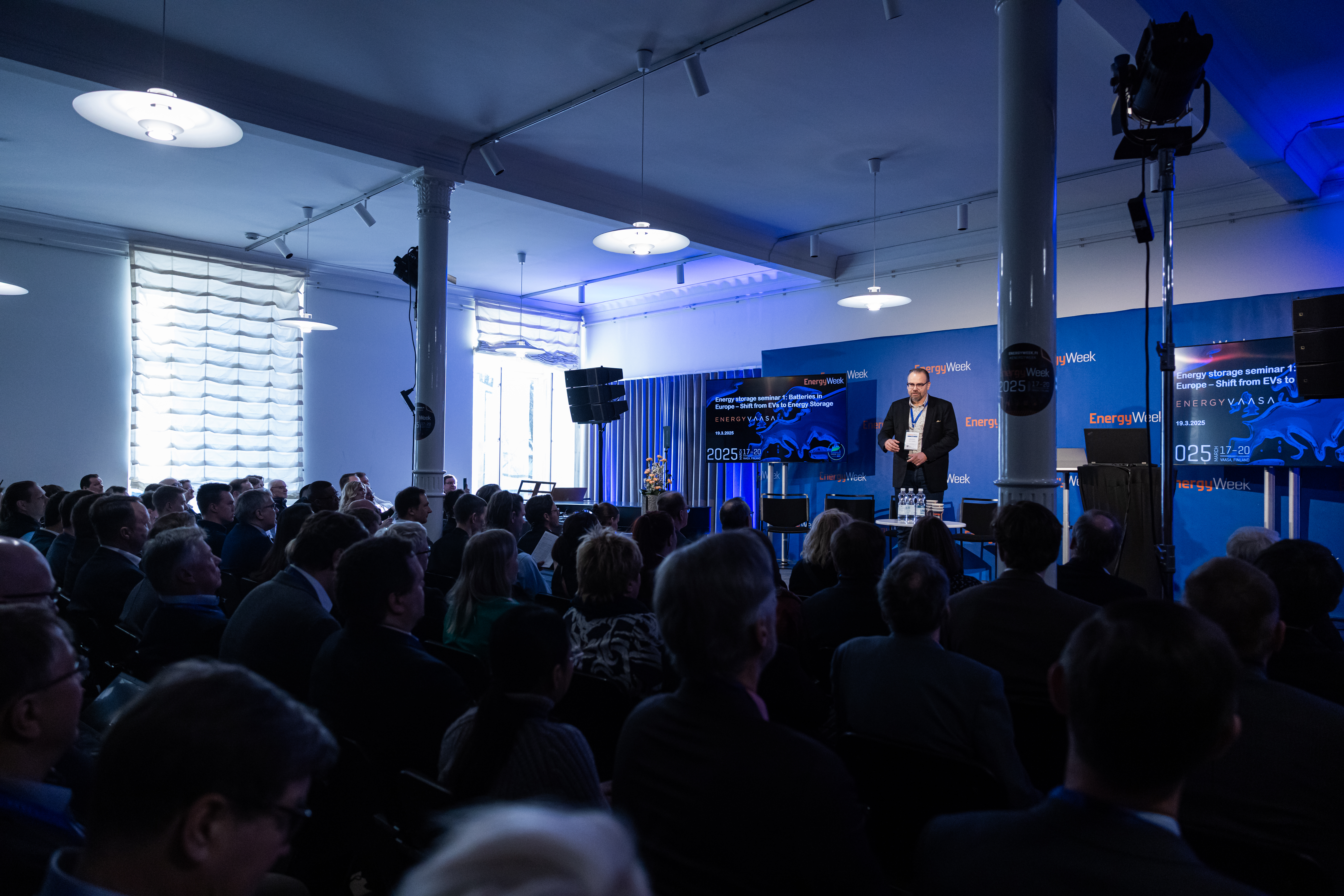
Novel Power Infra – Towards a Shared Validation Environment for Future Power Systems
Tuesday 17.3
This session opens with the early‑stage Novel Power Infra concept and insights from the EnergyVaasa collaboration, highlighting shared gaps in today’s device‑ and system‑level verification, validation and certification practices across the evolving power system.
After the introduction, leading experts will illustrate how these needs arise throughout the power system — from system‑level change and next‑generation digital substations to communication and IT/OT security, industry grid‑code requirements and the development of future research infrastructures.
The session demonstrates why future testing must combine physical, digital and virtual methods, forming a seamless device‑to‑system‑level validation chain.
Join the discussion and shape the future direction of Novel Power Infra — a shared concept that could strengthen interoperability, resilience and innovation across the energy ecosystem.
Novel Power Infra – Towards a Shared Validation Environment for Future Power Systems

Lasse Linnamaa: New Power System, New Needs
There are major technical changes in the core of power systems: renewables, energy storages and new kind of loads challenge the technical principles that used to guide system level design. New technology leads to new grid code requirements. Operating the grid changes as intermittent renewable energy causes new needs to balance the system rapidly. As the market reacts to this, new kind of flexibility and availability of ancillary services is called for to keep prices reasonable. Resilience becomes an important topic as the modern power system is more fragile in terms of stability, cybersecurity and physical security.

Nikos D. Hatziargyriou: Shaping Future Energy Systems Through Digitalisation, Artificial Intelligence, and Cyber Resilience
The next evolutionary phase of power systems transformation is expected to rely on three foundational pillars: extensive digitalisation enabling enhanced monitoring, control and system observability, use of artificial intelligence for optimal and efficient operation, and advanced cybersecurity to ensure resilient and secure system operation. In this context, advanced research infrastructures and laboratory validation approaches play a crucial role in supporting the transition, as they enable multi-domain co-simulation, incorporate digital twins for live, real-time system assessment and facilitate the interconnection and testing of geographically distributed equipment. This presentation will outline the strategic directions provided by the ETIP-SNET working groups that point towards these three pillars. It will also present future perspectives on the use of digital twins and artificial intelligence to address key challenges, as well as highlight the critical role of cybersecurity in protecting modern power systems.

Janne Starck: The Digital Architecture Perspective – System, Applications, and Next Generation Substations
The presentation examines how evolving substation automation architectures and an increasingly application‑rich system environment reshape the requirements for validation and testing. As modern substations integrate process‑bus‑based designs, digital protection schemes, and IEC 61850‑driven data models, the number of interfaces and automation functions grows significantly — bringing new interoperability challenges. The talk highlights why future validation must extend beyond device‑level testing to encompass complete system chains, ensuring that applications, automation logic, system interactions, and digital communication layers work reliably together in next‑generation substations.

Bas Kruimer: Secure IT/OT System Architecture – Interoperability & Testing
The presentation will address the definition of the cyber secure IT/OT system architecture for grid operators. Requirements for real-time system operations, data structuring, interoperability, digital substation, vPAC, digital twin, applying cyber security, which standards to apply and how to validate and test, all in relation to evolving towards the control room / system of the future. Validated and tested interoperability, real-time performance, and cyber secure operations driving the further advancements in the digital grid operations domain.

Khurram Shahzad: Opportunities and Challenges in Grid Codes Compliance for Power Converter Manufacturers
The presentation will show about the daily challenges in grid codes compliance testing and documentation for a power converter manufacturer like Danfoss. And how we can use techniques from software in loop, hardware in loop along with the actual lab testing to be fast and efficient in achieving compliance.

Alkistis Kontou: Key Insights for Shaping Next-Generation Research Infrastructures for Smart Grid Testing and Validation
The presentation draws on insights from the landmark European projects ERIGrid 2.0 and RISenergy to demonstrate the critical role of system-level testing and validation in the development, deployment, and effective integration of future technologies and solutions. Testing and validation extend beyond the confines of a single RI or simulation approach by leveraging co-simulation to assess cross-domain interactions, hardware–in-the-loop integration for realistic testing conditions, digital twins for system-wide real-time monitoring and dynamic assessment, and the interconnection of geographically distributed laboratories to enhance the capabilities of individual RIs. Examples of effective validation will be presented, including controller certification, distribution system control functionalities, cybersecurity assessment, etc.

Organized by